Comfort as an Emotional State
Comfort is an emotional state of the mind that profoundly influences behavior, thinking, focus, attention, and concentration.
Comfort is the feeling of well-being, safety, and risk-free behavior. It's associated with the "comfort zone" — the domain where you believe yourself located, where you operate with confidence and ease.
Comfort isn't merely physical. It's psychological. It's about feeling capable, safe, and in control. When you're in your comfort zone, you think clearly, focus easily, and perform well.
When you leave your comfort zone, everything changes.
Key concept
Comfort is a legitimate and important psychological state. Dismissing it as weakness misses the point—understanding it strategically is what matters.
The Yerkes-Dodson Law
The Yerkes-Dodson law describes an important relationship: cognitive performance as a function of stress/nervousness level.
The relationship isn't linear. Performance doesn't simply increase with arousal. Instead, there's an optimal level.
The Performance Curve (Yerkes-Dodson Law):
Imagine a curve with four sections:
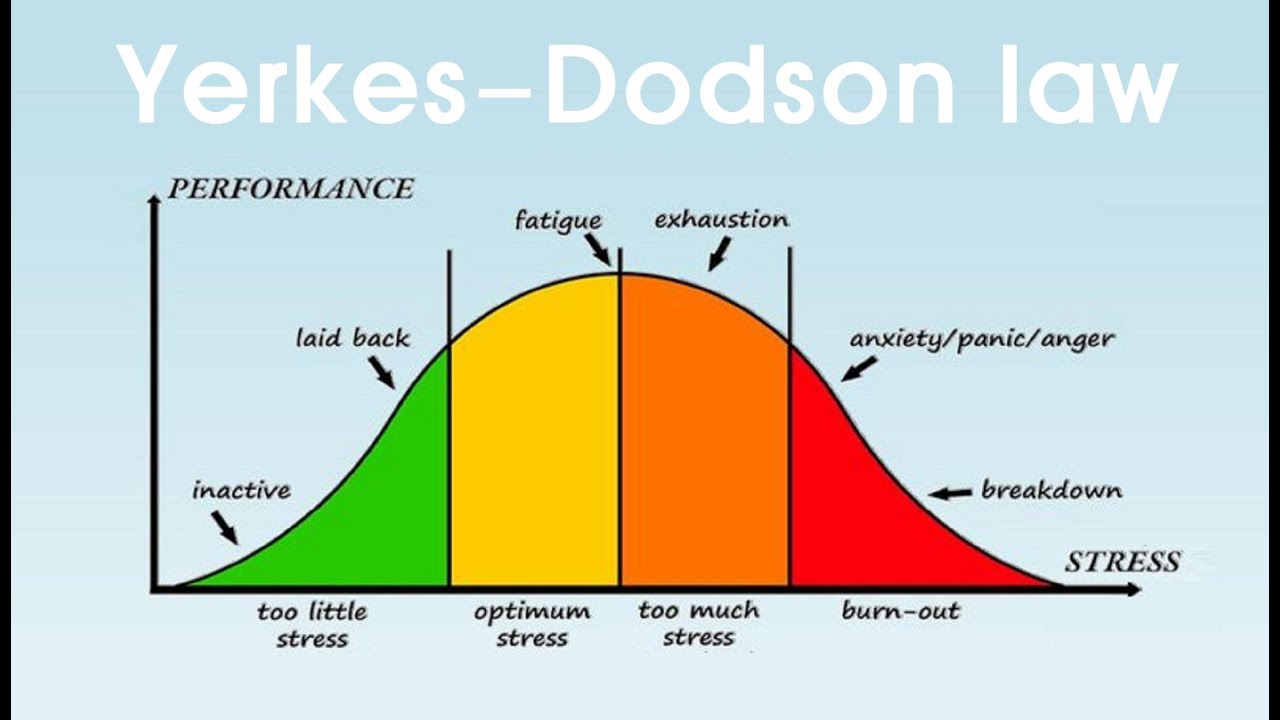
1. Low Arousal (Boredom)
When stress is too low, you're not engaged. Your mind wanders. You're underperforming.
2. Optimal Arousal (Flow)
As stress increases slightly, you become engaged. Your focus sharpens. Performance peaks. This is the sweet spot.
3. High Arousal (Anxiety)
As stress increases further, anxiety appears. Your thinking becomes rigid. Performance begins declining.
4. Extreme Arousal (Panic)
When stress becomes too high, you panic. Your thinking deteriorates. Performance collapses.
The optimal point varies by individual. Some people perform best with slight pressure. Others need more stimulation. Some panic easily.
Your comfort zone is the area around your personal optimal arousal point.
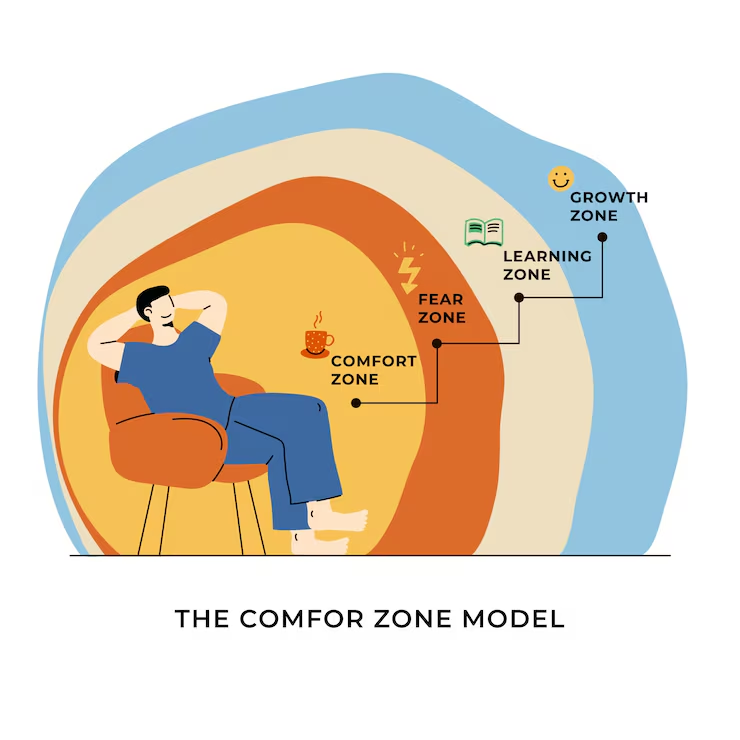
When you stay in your comfort zone, you operate near peak performance. When you venture too far out, anxiety increases and performance drops. When you're not challenged enough, boredom appears and performance drops.
Optimal performance exists at the edge of comfort, not deep within itLeaving the Comfort Zone
Your comfort zone consists of situations and fields where you have experience and know-how. You've encountered these before. You know how to navigate them.
When you leave your comfort zone, you enter territory where you have little or no experience. This uncertainty is powerful. It lowers your thinking ability. It impacts your thought processes. It slows you down.
This slowdown is real and important to understand. Uncertainty directly diminishes cognitive function.
You become less creative. Your problem-solving deteriorates. Your ability to connect concepts reduces. You're operating in a lower cognitive gear.
This is why stepping outside your comfort zone feels so hard. It's not weakness. It's neurology.
Why Children Don't Fear Mistakes
Small children exhibit remarkable behavior: they try new things constantly. They're not afraid. They're not uncertain. They fail regularly and simply try again.
Why? Because they haven't yet built the mental frameworks that create fear of failure.
To a small child, mistakes aren't failures. They're data. They're learning.
An adult sees a mistake and thinks: "I failed. I'm not good at this. I should stop trying."
A child sees a mistake and thinks: "Interesting! That didn't work. Let me try something else."
This difference is entirely learned. Children haven't internalized the fear response. They haven't built the self-doubt framework that adults carry.
Here's what's crucial: mistakes are an essential part of the learning process.
Not optional. Not unfortunate side effects. Essential. Fundamental.
Without mistakes, there's no learning. Mistakes are how your brain updates its mental models.
warning
The fear of mistakes that adults develop is one of the most significant barriers to learning. It's also entirely learned—which means it can be unlearned.
The Forest Metaphor
Imagine you're standing at the entrance to a massive dark forest at night. The forest is so dense that no light penetrates. To either side are unclimbable cliffs. Somewhere deep in this forest is something you want — but it's shrouded in darkness and uncertainty.
Common sense says: don't go in.
But now imagine that what you want is only a hundred yards into the forest, and it's brilliantly lit. It's the thing that will fulfill you the way you've always wanted. It's your real goal.
Would you still refuse to enter?
Those who choose to venture in discover something remarkable: they move faster than they ever have before. They sprint with intensity they didn't know they possessed. The goal — clearly visible, genuinely desired — pulls them forward.
This is the power of stepping outside your comfort zone with a compelling goal.
The darkness (uncertainty) is real. The difficulty is real. The fear is real.
But the speed of progress once you commit? Also real. Often surprising.
Discomfort with a clear goal produces remarkable accelerationThe Progression of Growth
Here's how this works over time:
Iteration 1: You encounter a new situation. You don't know what to do. You're outside your comfort zone. Uncertainty is high. Performance is lower.
You work through it. You learn something. You gain experience.
Iteration 2: You encounter a similar situation. You're still outside your comfort zone, but less so. Your previous experience helps. You perform better.
Iteration 3: You encounter the situation again. Now it's becoming familiar. It's starting to enter your comfort zone. Performance improves noticeably.
Iteration 4+: Repetition continues. What was initially terrifying becomes routine. What was outside your comfort zone is now well within it.
But here's the pattern: each iteration makes you more capable. Each experience becomes part of your new baseline.
Your comfort zone expands. What was scary becomes comfortable. And you're ready to venture into new territory.
This is how experts develop. Not by staying in comfort zones. But by repeatedly stepping out, learning, integrating, and expanding their zones.
The Relationship Between Comfort and Growth
This creates a tension:
- Stay comfortable → safe, easy, but stagnant
- Leave comfort → difficult, uncertain, but growth-oriented
Neither extreme is optimal.
The skill is stepping just outside your comfort zone — at the edge of your capability, where the Yerkes-Dodson optimal arousal lives.
This is where:
- You're challenged enough to engage fully
- You're not so overwhelmed that you panic
- You can still think clearly and problem-solve
- Learning happens rapidly
In security learning:
- Too comfortable: You're reading tutorials passively. No real challenge. Learning stagnates.
- Too uncomfortable: You're attacking systems you have no understanding of. You're lost. Learning is impossible.
- Optimal: You understand fundamentals. You're tackling something slightly beyond your current capability. You're stretched but not broken.
Normalizing Discomfort
As you progress in security:
You will frequently not know what to do.This isn't failure. This isn't a sign you're in the wrong field. This is normal. This is how learning works.
Each time you encounter this uncertainty and work through it, two things happen:
- You gain specific knowledge about that domain
- You build confidence that you can handle uncertainty
The confidence compounds. The 50th time you don't know what to do, you think: "I've been here before. I don't know the answer yet, but I know how to find it."
That's growth.
The progression is:
- First encounter: "I don't know. I'm scared. I might fail."
- Fifth encounter: "I don't know. But I've handled similar situations."
- Twentieth encounter: "I don't know this specifically, but I know the process to find the answer."
Each step is learning. Each step expands your comfort zone.
What is comfort as a psychological state?
What does the Yerkes-Dodson law describe?
What are the four sections of the performance curve?
Where is the optimal performance point located?
What happens when you leave your comfort zone?
Why don't small children fear mistakes?
Why are mistakes essential to learning?
What does the forest metaphor teach about stepping outside comfort zones?
How does your comfort zone expand?
What is the optimal balance between comfort and growth?
Exercise 1 — Do one “small discomfort” action today
Pick one action that feels slightly uncomfortable but useful:
- Ask a question publicly
- Attempt a lab without a walkthrough for 15 minutes
- Explain a concept out loud
Write what you felt before/after.
Question 1 — Why does growth usually require discomfort?
Next Lesson
With comfort strategically understood, the next lesson teaches how to overcome obstacles and build resilience.
Next: Overcoming Obstacles