Why Information Security Matters
Every day, we depend on digital systems for nearly everything—communicating with loved ones, managing finances, shopping online, and running organizations. This constant connectivity brings enormous value, but it also creates a critical vulnerability: our data is constantly at risk.
Information Security (InfoSec) is the practice of protecting information and systems from people who shouldn't have access to them. It prevents unauthorized viewing, modification, or destruction of data. Without it, sensitive personal details, business secrets, financial records, and even government information remain exposed.
Think of the stakes this way: a single data breach can result in financial loss, damaged reputation, legal consequences, and compromised national security. As organizations move more services online—a trend called digital transformation—they become larger targets for increasingly sophisticated attackers.
Key concept
Why this matters to you: Whether you aspire to be a penetration tester, security analyst, or defender, understanding how InfoSec is structured gives you a roadmap for your career and helps you identify where you fit in this ecosystem.
The Digital World: A Map of Connected Systems
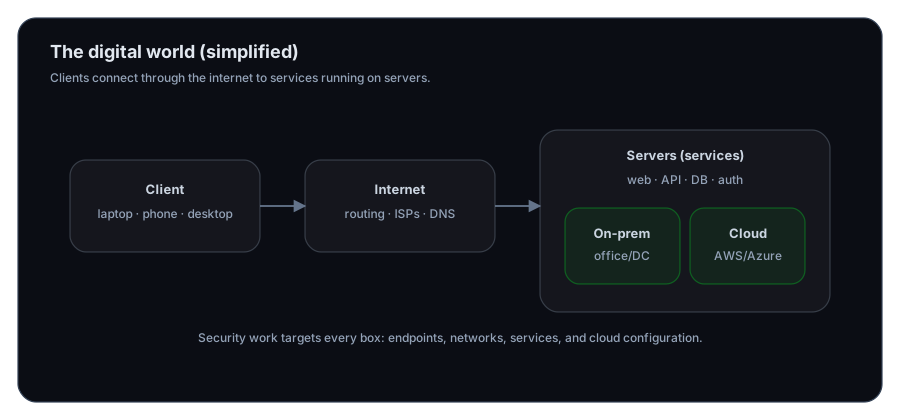
To navigate information security, you need a mental model of how the Digital World is organized. Here are the core components:
Clients are the devices you use—your laptop, phone, or desktop computer. Through these, you access services and resources on the internet.
The Internet is the vast, interconnected network of servers providing countless services and applications. It's the backbone enabling all digital communication and data exchange.
Servers are computers designed to deliver specific services and applications. A web server, for example, hosts the website you're reading right now and makes its content viewable on your device.
Networks form when multiple computers or servers connect and communicate with each other. A network could be a small office setup or span entire data centers.
Cloud refers to distributed data centers offering shared server resources. Instead of owning physical hardware, organizations and individuals rent computing power and storage from cloud providers.
These elements work together as an interconnected system. Your client connects through the internet to reach servers, whether those servers are in a physical office network or spread across a cloud infrastructure.
The Three Team Model
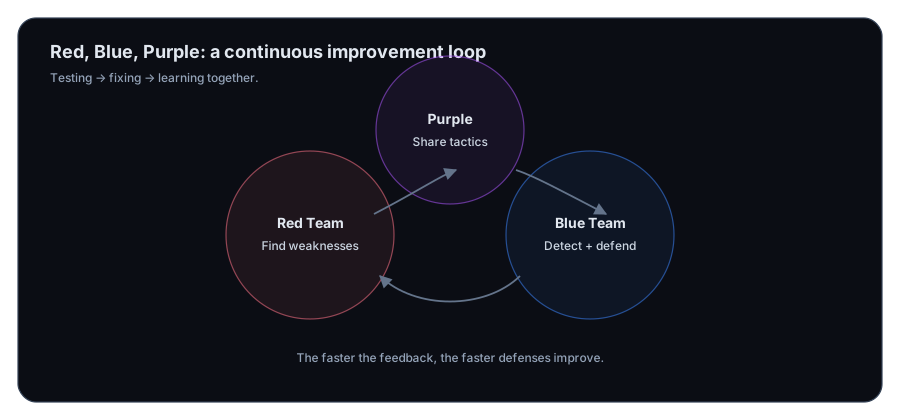
In cybersecurity operations, Three distinct Team types protect organizations from different angles:
| Team Type | Focus | Role |
|---|---|---|
| Blue Team | Defense and protection | Builds safeguards, detects attacks, responds to incidents |
| Red Team | Simulated offense | Acts as adversaries, finds vulnerabilities through attacks |
| Purple Team | Collaboration | Blue and Red teams working together to strengthen defenses |
These teams don't operate in isolation. Red teams identify weaknesses; Blue teams fix them. Purple teams bring both perspectives together, creating a continuous cycle of testing and improvement.
Core Domains of Information Security
InfoSec is vast and multifaceted. Organizations protect their assets across several interconnected Domains:
Network Security safeguards the infrastructure that moves data between systems—firewalls, routing protocols, and secure connections.
Application Security focuses on protecting the software itself from being exploited or misused.
Operational Security covers the day-to-day procedures and practices that keep systems secure—like how employees handle passwords or access sensitive files.
Cloud Security addresses the unique challenges of protecting data stored and processed in distributed cloud environments.
Physical Security ensures that hardware and facilities are protected from theft, damage, or unauthorized access.
Mobile Security protects smartphones and tablets from threats specific to those devices.
Internet of Things (IoT) Security secures connected devices—everything from smart home systems to industrial sensors.
Disaster Recovery and Business Continuity ensures organizations can recover quickly from incidents and keep operations running.
This list is not exhaustive. As technology evolves, new security domains emerge. The field is constantly expanding.
Understanding Risk, Threat, and Vulnerability
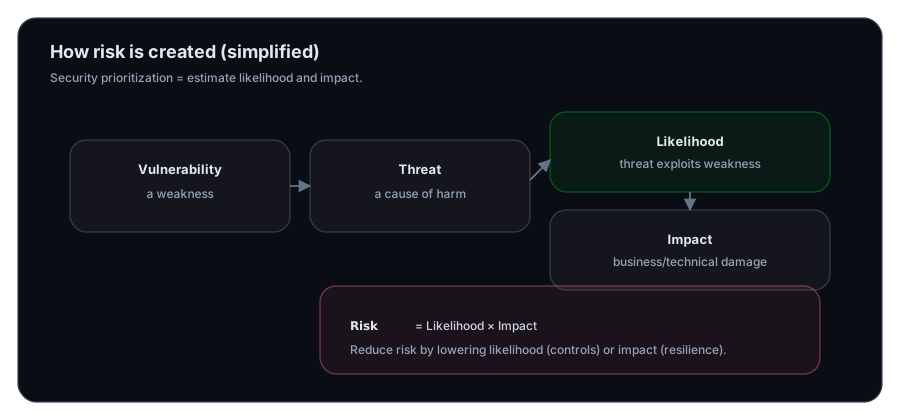
Three concepts form the foundation of security thinking. Often confused, they work together and must be understood distinctly.
A Vulnerability is a weakness in a system. It might be a software bug, a misconfigured setting, or a weak password. A vulnerability alone doesn't guarantee damage—it's simply a flaw waiting to be exploited.
A Threat is a potential cause of harm. It could be a person (a hacker or disgruntled employee) or a natural event (a fire or flood). Threats are the actors or forces that seek to exploit vulnerabilities.
A Risk is the potential for actual damage to occur. Risk combines threat and vulnerability: it's the likelihood that a threat will exploit a vulnerability, multiplied by the severity of the resulting impact.
To illustrate: A house with an unlocked door has a vulnerability. A burglar in the neighborhood is a threat. The actual danger—that the burglar will break in and steal—is the risk. Effective security management means identifying vulnerabilities, understanding what threats exist, and calculating which risks matter most.
Roles and Responsibilities
Information Security isn't a single job—it's an ecosystem of specialized Roles, each essential to an organization's defense.
| Role | Primary Responsibility |
|---|---|
| Chief Information Security Officer (CISO) | Sets overall security strategy and oversees the entire security program |
| Security Architect | Designs systems and networks with security built in from the start |
| Penetration Tester | Conducts authorized simulated attacks to discover and document vulnerabilities |
| Incident Response Specialist | Detects, investigates, and manages security incidents as they happen |
| Security Analyst | Monitors systems for suspicious activity and analyzes security data |
| Compliance Specialist | Ensures the organization meets legal and regulatory security requirements |
These roles often work together. A penetration tester might discover a vulnerability; an incident response specialist learns how to detect and contain it; a security analyst monitors for signs of exploitation. Each perspective strengthens the whole.
Key concept
For aspiring penetration testers: Your role sits at the intersection of technical skill and strategic thinking. You identify weaknesses before attackers do, helping organizations defend what matters most.
The Bigger Picture
Information Security exists because information has value. Personal data, intellectual property, financial records, and secrets—all are targets. The rising tide of digital transformation has expanded what organizations must protect while simultaneously creating more opportunities for attackers.
As an organization grows and digitizes more of its operations, it attracts more sophisticated threats. Just as a fortress must strengthen its walls as it becomes more valuable, organizations must continuously improve their security posture as they move deeper into the digital world.
Your journey into cybersecurity begins with understanding this landscape. The modules ahead will equip you with the specific technical and tactical skills you need. But first, you must see the forest—how all the pieces fit together, where vulnerabilities hide, and where your expertise is needed.
What is the primary goal of Information Security?
What is the difference between a vulnerability and a threat?
How do Blue Team, Red Team, and Purple Team differ?
What is digital transformation and why does it increase security risks?
Name three domains of Information Security.
What is the relationship between risk, threat, and vulnerability?
What does a Penetration Tester do?
Why is understanding InfoSec structure important for beginners?
Exercise 1 — Map InfoSec domains to real controls
Pick one organization you know (school, small business, your own lab) and map at least 2 controls to each domain:
- Network Security
- Application Security
- Operational Security (OpSec)
- Physical Security
Question 1 — Why is understanding the structure of InfoSec useful before learning attacks?
Next Lesson
Now that you understand how information security is structured and organized, it's time to explore the foundational principles that guide all security work.
Next: Fundamental Security Principles